

Why Rajkot Chose the Smart City Path: Necessity, Vision, and Digital Enablement
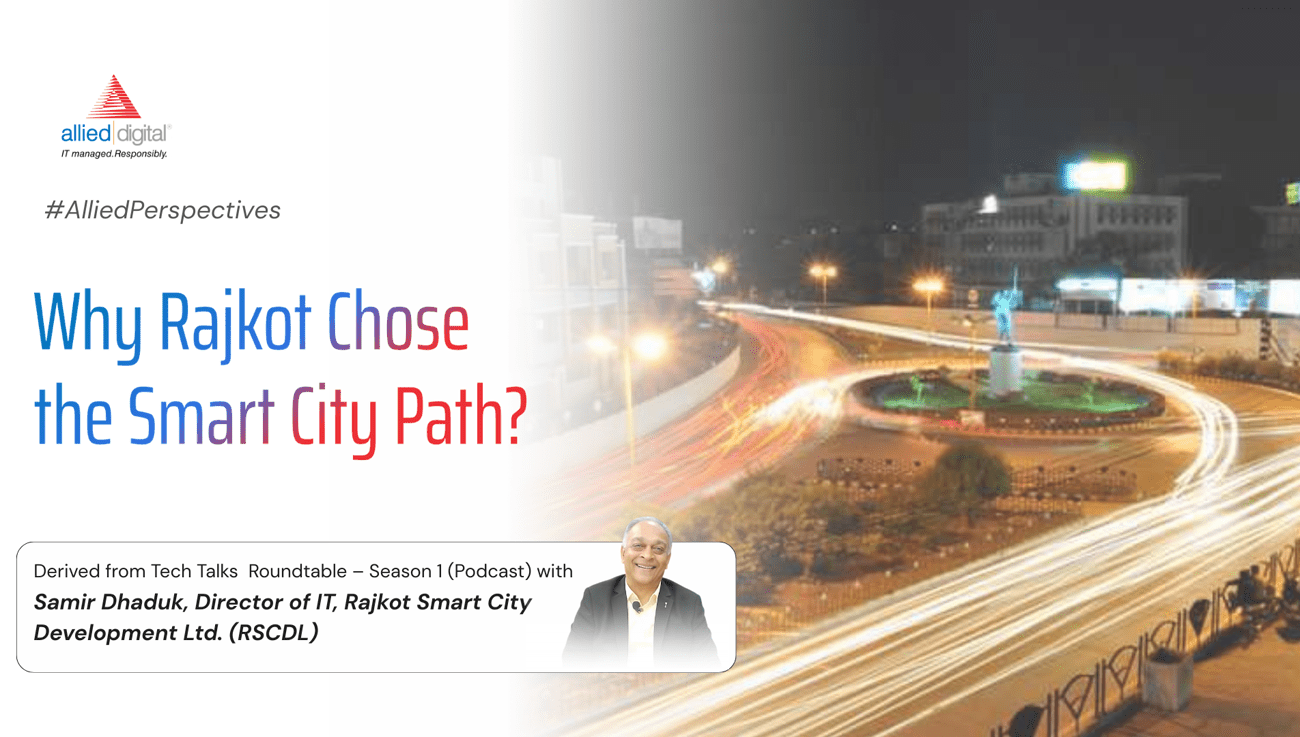


Rajkot’s journey toward becoming a Smart City is not a story of trend adoption it is a story of necessity meeting opportunity, strengthened by forward-thinking governance and digital transformation.
As the fourth largest city in Gujarat, with a population nearing 2 million and steadily increasing, Rajkot found itself at a pivotal crossroads. Rapid growth, entrepreneurial momentum, and expanding urban boundaries demanded a new approach to civic planning. The Smart City mission became the framework through which Rajkot could future-proof its development.
And at the heart of such transformations lies a powerful enabler technology.
A City Fuelled by Entrepreneurial Energy
Rajkot has long been recognized as a thriving entrepreneurial ecosystem. People from across Saurashtra aspire to move to Rajkot not just to live, but to build, innovate, and excel.
The city nurtures ambition. It provides fertile ground for small and medium enterprises, emerging entrepreneurs, and growing businesses. This economic vibrancy has led to:
- Rapid population growth
- Expanding real estate demand
- Increased migration into the city
- Accelerated infrastructure expansion
While this growth is a sign of prosperity, it also brings complex urban challenges.
Urban Pressure: The Real Trigger Behind Smart City Adoption
As the city expanded, civic services began experiencing visible strain. Rajkot started facing the same challenges typically associated with larger metropolitan cities.
Core services such as:
- Water supply systems
- Waste management
- Drainage networks
- Public infrastructure was under mounting pressure.
The inflow of residents and business establishments meant higher consumption, greater waste generation, and increased stress on public utilities. Traditional systems were no longer sufficient to support a rapidly modernizing city.
This is where the Smart City initiative emerged not as a luxury, but as a necessity.
Necessity First, Opportunity Next
A key insight from the roundtable discussion was simple yet powerful:
“First comes necessity, then comes opportunity.”
Rajkot’s leadership recognized that if infrastructure modernization did not happen in time, quality of life and governance efficiency would be compromised.
Smart City frameworks offered:
- Digitally enabled service delivery
- Data-driven decision-making
- Infrastructure optimization
- Improved citizen engagement
- Scalable urban planning
By adopting smart solutions early, Rajkot positioned itself not just to solve existing problems but to prevent future ones.
Forward-Thinking Governance as the Catalyst
Transformation at city scale requires leadership vision. Rajkot’s municipal commissioners and elected officials demonstrated proactive thinking, choosing modernization over reactive firefighting.
Rather than waiting for infrastructure failures or service breakdowns, the administration embraced structured urban innovation.
Such governance maturity creates the right environment for digital transformation partners to contribute meaningfully.
The Role of Digital Enablement in Smart Urban Ecosystems
Smart Cities are not built by infrastructure alone they are built by integrating technology into governance.
This is where digital transformation players like Allied Digital become critical to the ecosystem.
Smart city evolution demands:
- Secure and resilient IT infrastructure
- Integrated command and control systems
- Smart monitoring solutions
- Cloud-based service platforms
- Cybersecurity frameworks
- Seamless citizen service interfaces
Urban modernization is no longer just about roads and pipelines it is about connected systems, data intelligence, and real-time decision-making.
With decades of expertise in IT infrastructure management, digital transformation, cybersecurity, and smart solutions, Allied Digital plays a strategic role in enabling cities to transition from conventional governance to intelligent urban ecosystems.
In conversations like these at Allied Digital’s Tech Talks Round Table, what emerges clearly is this:
Smart city transformation is not only about technology implementation.
It is about aligning governance vision with digital capability.
Rajkot’s Smart Future: A Blueprint for Emerging Cities
Rajkot’s journey reflects a broader shift across India mid-sized cities are now experiencing big-city challenges. The difference lies in how proactively they respond.
By embracing the Smart City mission:
- Rajkot strengthens service delivery
- Builds resilient infrastructure
- Enhances citizen experience
- Prepares for sustained urban growth
It transforms necessity into long-term opportunity.
Allied Digital’s Impact in Rajkot:
Allied Digital played a pivotal role in Rajkot’s Smart City transformation by delivering technology-driven solutions that addressed some of the city’s most critical urban challenges. Partnering with Rajkot Smart City Development Limited (RSCDL) through a transparent and competitive selection process, Allied Digital implemented key projects such as the Smart Illegal Hawking Prevention System and the city’s modern Data Center infrastructure.
Instead of deploying generic solutions, Allied Digital customized its approach to Rajkot’s local needs, particularly tackling the issue of unregulated street vending that contributed to congestion, safety concerns, and disorder in busy market areas. By integrating AI-enabled surveillance cameras with real-time alert mechanisms and dashboards at the Integrated Command and Control Center (ICCC), Allied Digital enabled municipal authorities to respond faster and manage city operations more efficiently.
The impact of Allied Digital’s interventions has been both visible and measurable across Rajkot. The AI-powered hawking prevention system resulted in more than a 60% reduction in illegal hawking incidents in monitored zones, improving pedestrian movement, reducing traffic bottlenecks, and creating more organized public spaces. Alongside this, the company built a secure and scalable Data Center that now serves as the digital backbone for Rajkot’s smart city ecosystem, hosting critical platforms such as surveillance systems, traffic management, public safety tools, and e-governance services. Together, these initiatives have strengthened centralized governance, improved service delivery for citizens, and positioned Rajkot as a leading example of how mid-sized cities can leverage innovation to enhance quality of life and build a future-ready urban environment.
Conclusion: Smart City as a Strategic Imperative Rajkot did not choose the Smart City path for prestige it chose it for preparedness.
Driven by population growth, entrepreneurial expansion, civic pressure, and visionary leadership, the city understood that modernization was not optional.
As cities like Rajkot evolve, technology partners such as Allied Digital become key enablers bridging governance goals with digital execution.
Because in today’s urban landscape, becoming “smart” is not about automation alone.
It is about building cities that are scalable, sustainable, secure, and citizen centric.
And Rajkot’s journey is a compelling example of how necessity, when guided by vision and supported by digital expertise, becomes transformation.